
Introduction
Now that we’ve covered the banking flywheels basics, we can get to the good stuff — like how your bank can actually build one. For the purpose of explanation, let’s split things out into two halves: technology, which we’ll cover here, and business, which will be the focus of the next blog in this series. Then, we can circle back to analyze why these two areas need to function in harmony to drive mutual momentum.
For now, let’s take a look at the key challenges that tech leaders are facing. After that, we’ll explore how you can provide momentum for your flywheel and power ongoing, cyclical value for your bank and its customers.
The burdens of tech debt
Let’s address the elephant in the room here — banking IT leaders just like you are laboring beneath a massive amount of tech debt. Banks are spending hundreds of millions of dollars per year maintaining their legacy tech and point solutions, and it’s only getting worse.
Did you know that
legacy maintenance costs will continue rising 7.8% year-on-year, with a new peak of $57 billion in 2028, according to a recent IDC study.
And that’s the cost you’re paying just to keep the lights on! Not innovation, not value, just maintenance. This is a massive investment for your day-to-day operations, and it’s also taking a huge bite out of your budget. That means things won’t get better in the days to come — unless you can find a way to power your flywheel so that it not only removes tech debt, but also powers your IT operations.
Using your flywheel to deliver business value
As we’ve hinted above, tech debt is your biggest hurdle here, but it’s also your gateway to success. First, you should start by moving to a more simplified IT landscape. A common platform architecture in particular can be enormously helpful with this, as it will allow you to gradually decommission your legacy systems. And you’ll soon see the benefits of this approach, as McKinsey estimates you can quickly reduce your IT costs by 30%, if you prioritize the right things and take an aggressive approach. Once you realize the inevitable cost savings, you’ll be free to reinvest that cash flow in another tech-debt-reduction cycle, and that’s when you’ll really see your flywheel come alive, as demonstrated in the chart below.
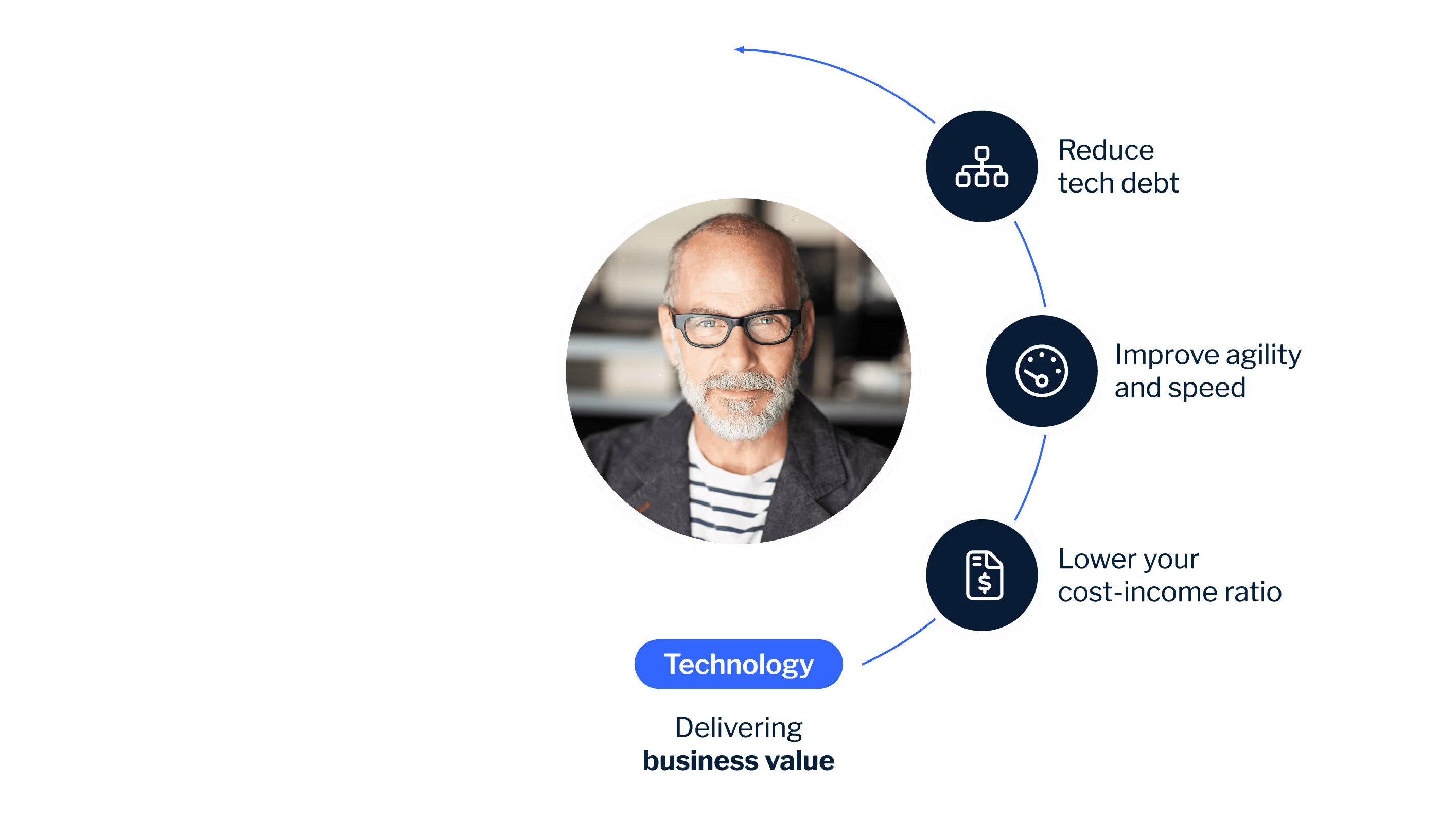
As you can see, your path to delivering business value looks something like this:
- Reduce tech debt — Start by overhauling your legacy systems, which will boost your agility and increase your speed of innovation.
- Improve agility and speed — With increased agility/speed comes greater efficiency and more opportunities for innovation at scale.
- Lower your cost to income ratio — Finally, with greater efficiency, you’ll be able to lower your cost to income ratio and use the funds to drive further reduction of tech debt.
At Backbase, we’ve worked with dozens upon dozens of customers, and that means this tech flywheel is battle tested on a global scale. As a tech leader in banking, you’re probably already eager to simplify your IT landscape — and here’s your chance. As you create a fitter, leaner IT landscape, you’ll gain a host of advantages, and that’s your springboard towards flywheel momentum, which you can reinvest into the business side of things to drive holistic, bank-wide value. But that’s a topic for next time.
Using your flywheel to deliver customer value
In the following blog, you’ll get a glimpse at the customer side of things, including the unique concerns there and how you can build that part of your bank’s flywheel to deliver immense value to customers at speed and scale. And after that, you’ll get the payoff we’ve promised about uniting the two, and that’s where the real value comes in. It’s been a long journey, we know, but it will be a rewarding one — giving your bank the insights you need to future-proof your operating model for a more sustainable, efficient tomorrow.
For more information, check out our Banking Reinvented podcast, where Backbase Founder/CEO Jouk Pleiter dissects similar topics alongside Tim Rutten, EVP/Chief of Staff, and other digital leaders. Stay tuned as they chat about everything from progressive modernization to decomposing your bank’s complexity.

