Backbase
The customer sees one team. Behind that is three time zones and a system that never sleeps.
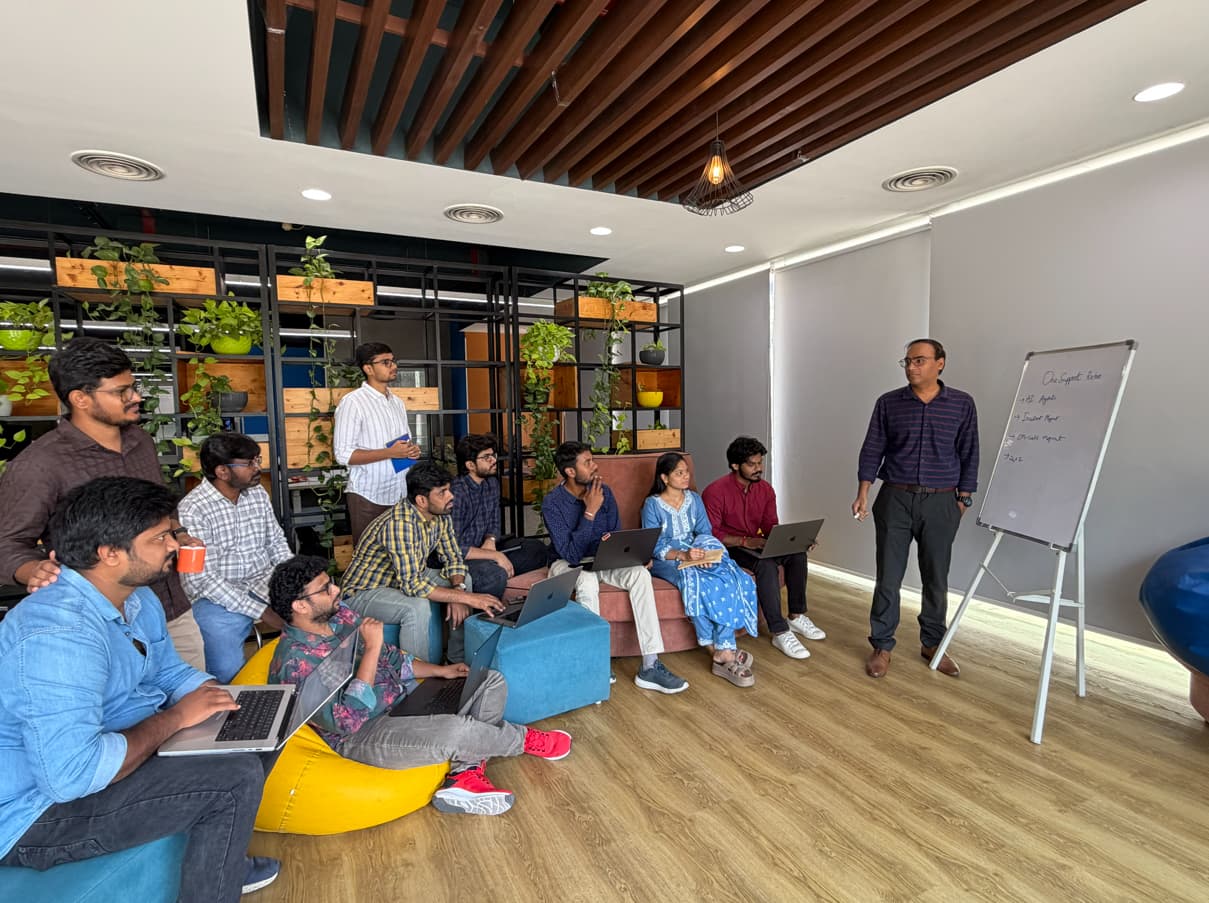

How OneSupport India Team, part of One Support Global organization took a fragmented global support model and rebuilt it into a single, unified operation - and what it actually takes to make complexity invisible.
The problem
Before OneSupport, support at Backbase was distributed across three separate functions operating independently. Product Support handled first-line tickets. Regional Managed Services teams in India, Poland, and Mexico owned second-line resolution. Managed Hosting teams ran infrastructure in their own lane.
The result was exactly what you'd expect. Customers dealing with an incident didn't have one point of contact - they had several. Escalation paths were unclear. Response times were inconsistent. During a critical incident, there was no single person owning the war room. Coordination happened ad hoc, and every handover between teams was a potential gap.
The mandate was straightforward: fix it. Bring everything under one roof, one team, one name.
"The customer should never see the complexity behind the curtain. No shift gaps, no update chasing, no multiple voices on an incident call - just one seamless experience."
What they built
OneSupport India is part of the single front door for 120+ banks globally. The team of 26 engineers spans system engineers, application developers, site reliability engineers, DBAs, and round-the-clock first and second-line support - all operating under a unified mission: maximize application availability.
The follow-the-sun model means every hour of every day has a named owner - when the India shift ends, Poland picks up; when Poland closes, Mexico is already running. The handover is a smooth, structured transition with an Incident Manager in each region accountable for continuity.
The playbooks are standardized. The escalation paths are defined. The Incident Manager on a critical incident doesn't leave the bridge until the issue is genuinely resolved - not just closed.
What changed
In six months - from the end of Q2 2025 to Q4 2025 - critical incident volumes dropped by 60%. More importantly, the team started catching issues before customers felt them. Monitoring improvements meant internal detection rates went up, and problems that would previously have surfaced as customer-reported incidents were being resolved in the background.
Phase one was stabilisation: ownership defined, 24x7 model operational, escalation formalised, reactive firefighting behind them. Phase two - where the team is now - is detection and prevention. Shifting from responding to incidents to stopping them before they start.
Phase two took it a step further: AI agents that can auto-triage, diagnose known patterns, and trigger remediation autonomously.
"This transformation helped us move from reactive firefighting to proactive reliability engineering."
- Sridhar Lingampalli, Senior Engineering Manager, OneSupport India
"Don't wait to be told the problem is yours. If you see it, you own it - and then bring the right people in. At Backbase, ownership isn't a title or a process. It's a reflex."
What they say about Backbase
OneSupport didn't happen because a process document said it should. It happened because a team decided the fragmented model wasn't good enough and built something better - across three time zones, dozens of engineers, and a support surface that runs every hour of every day.
The customer sees one team. That's the point. Making the complexity behind it invisible is the work.