Banking mergers and acquisitions: lessons from the trenches
Bank M&A failures create massive value destruction. I've witnessed this destruction from three critical vantage points:
Banker: Managed our own acquisition with brutal deposit retention goals while watching competitors hemorrhage customers from botched conversions
Fintech consultant: Built pro-forma models analyzing system overlaps and conversion timelines that determined deal success
M&A advisor: Watched acquirers lose key commercial lenders immediately after closing, destroying the very value they paid for
The stakes have escalated. Banks now need scale across everything—not just back-office functions like IT, but growth engines like digital delivery and marketing.
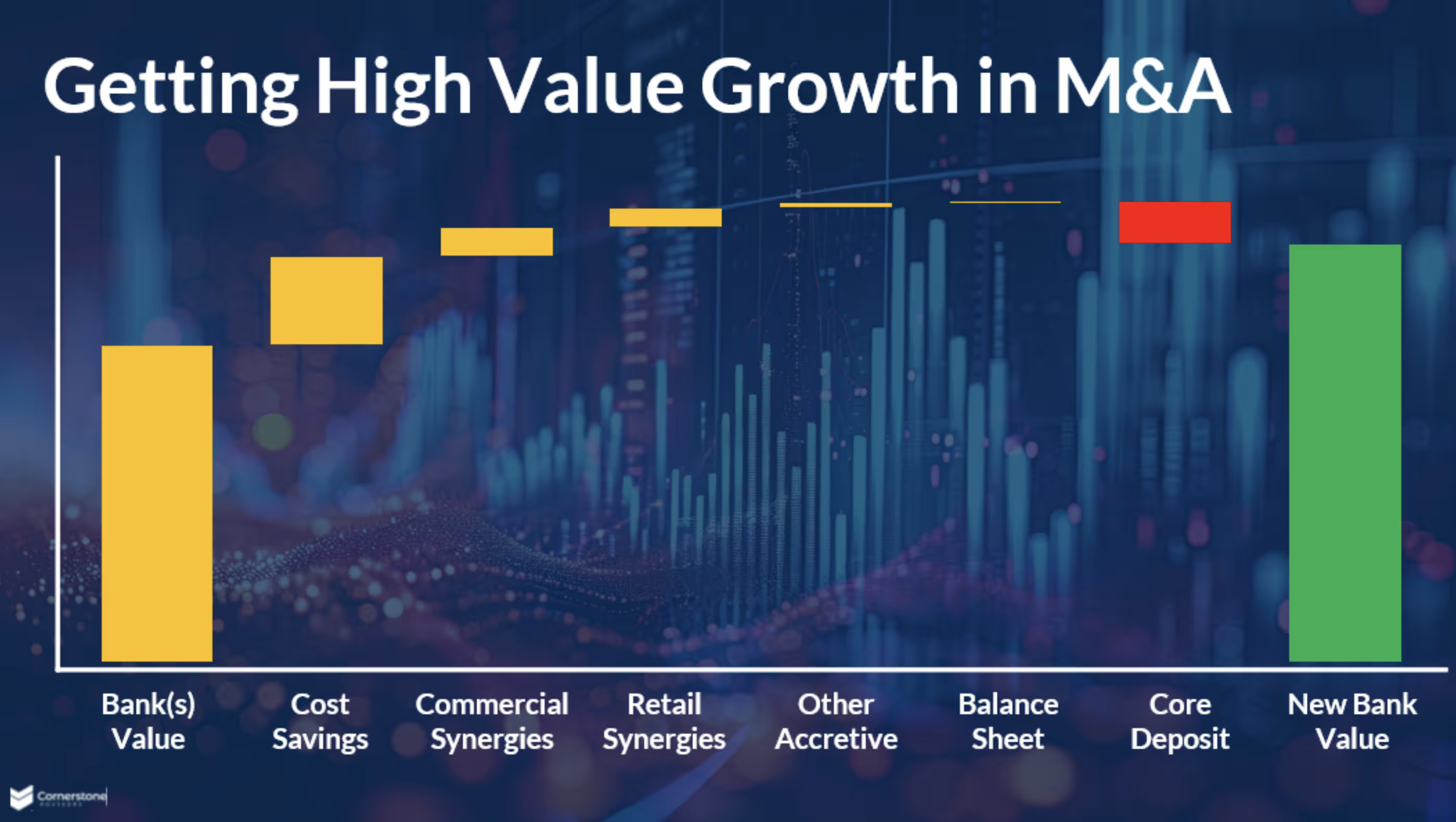
Getting high value growth in M&A
Banks achieve high-value growth in M&A through two proven strategies: traditional cost synergies and increasingly important revenue synergies. Cost take-outs remain reliably controllable, but leading acquirers now capture significant revenue upside in both retail and commercial segments.

Source: Cornerstone Advisors
Source: Cornerstone Advisors
Three rules to protect deal value
Banks destroy deal value by treating M&A integration as project management instead of strategic program leadership. Mary Eyre, Cornerstone Advisors' M&A practice leader and veteran banker, has identified eight non-negotiables that keep customer attrition at the low end of historical ranges.
Here are three core rules from her framework:
Stabilize pricing and systems: with consumer banking clients, two common risk factors to mitigate are product pricing and system conversion missteps.
Move the cheese lightly: with business and wealth clients, two common risk factors to mitigate are relationship manager retention and branch moves.
Leadership & management accountability: during and after the deals, success comes down to leadership. Eyre points to making retention someone's day job with segment-level targets, incentive alignment, and daily monitoring including early warning indicators.
Monitor digital, retain human intelligence
Digital channels create first impressions and ongoing relationship health signals during M&A integration. Monitor these early warning indicators beyond basic wait times and abandonment rates:
App responsiveness: Track loading speeds and error rates across mobile platforms
Plain-language communications: Audit FAQs, mapping tools, and banner messaging for clarity
Digital abandonment patterns: Identify where customers drop off in key workflows
FAQ: What digital metrics matter most during bank M&A?
Q: Which digital warning signs predict customer attrition during M&A integration?
A: App crashes, confusing navigation changes, and delayed response times to digital inquiries consistently predict customer departures. Monitor these daily, not monthly.
Successful M&A integration requires battle-tested human judgment alongside unified platforms, not just playbooks and AI tools. The leaders who consistently protect deal value have lived through multiple integrations and learned from both successes and disasters.
The lesson: systematic program leadership beats project management every time.