There's no shortage of conversation about AI in banking right now. Most of it focuses on what's possible. Less of it focuses on what's practical.
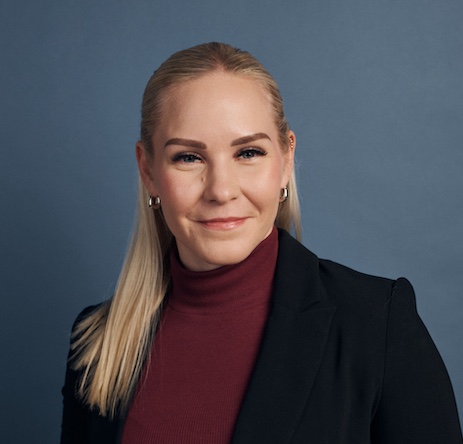
That's what made a recent conversation between our Shyam Mohan, Director of Strategy Consulting at Backbase, and Mindaugas Vaiciulis, SVP and Head of Technology for Wealth Planning & Investments at Danske Bank, worth paying attention to. For 30 minutes on our Digital Banking Strategy Talk, they worked through where AI is genuinely landing in wealth advisory today, where it's not ready, and what's actually slowing adoption down.
What follows are six practitioner insights from that conversation. Not predictions, not aspirations, but observations from someone building this in practice at one of Europe's largest banks.
The first returns come from giving advisors their time back
When asked where credible AI value shows up first in wealth, Mindaugas didn't point to client-facing innovation. He pointed to operational work: meeting preparation, note-taking, servicing workflows. The kind of work that fills up an advisor's calendar but doesn't directly serve clients. Industry data suggests that relationship managers spend 50 to 75 percent of their time on internal tasks rather than with clients.
He frames AI value in three phases: cheaper, then more, then better.
- Cheaper: Automating operational tasks to reduce cost-to-serve
- More: Freeing up advisor capacity to serve more clients
- Better: Elevating the quality of conversations, relationships, and trust
Most banks are still in phase one. That's not a criticism, that's where the credible, measurable ROI lives. The important thing is recognizing it as a starting point, not the destination.
The hybrid model isn't two separate tracks
One of the most interesting parts of the discussion was how Mindaugas thinks about the relationship between digital and human advisory. For him, these aren't two parallel experiences that a client toggles between. They're one continuous journey.
Today, most wealth management firms offer two modes: the self-service app where clients check their portfolio, and the advisor meeting that happens once or twice a year. Between those two touchpoints, there isn't much.
AI changes that. It can fill the space between self-service and full advisory with on-demand insights, contextual commentary, and proactive guidance. Not as a replacement for the advisor, but as a way to keep the relationship alive between meetings.
This matters especially for mass affluent clients. In the Nordics, these are people with meaningful wealth to manage but who typically don't qualify for the full white-glove treatment. AI can make wealth-level guidance accessible to them for the first time, bridging the gap without requiring the same cost-to-serve as a dedicated relationship manager.
Not everything should be AI-driven
Perhaps the most valuable part of the conversation was Mindaugas being explicit about where AI doesn't belong. He described a three-layer approach his team uses at Danske Bank:
- Layer 1, AI: Insights, commentary, portfolio education, proactive nudges. AI is excellent at explaining what's happening, surfacing what's relevant, and prompting clients to think about their next move.
- Layer 2, Rule-based: Portfolio rebalancing, suitability checks, risk calculations. These need to stay deterministic. No room for AI interpretation.
- Layer 3, Human: Buying a home, planning retirement, succession, or any major life decision. These are the moments where empathy, judgment, and trust are irreplaceable.
That kind of clarity on boundaries is something many institutions are still working through. The conversation about AI in wealth management often defaults to "how do we use it everywhere." A more useful question is "how do we use it in the right places."
The service gap most firms aren't filling
The conversation kept circling back to a specific opportunity: the space between transactional self-service and the scheduled advisor meeting.
Right now, that space is mostly empty. Clients who want to understand their portfolio performance, what market movements mean for them, or whether they should be thinking about a financial decision have two options: figure it out themselves or wait for their next meeting.
AI makes it possible to fill that space with something that feels like advice rather than a data dump: performance reports that explain what they mean, market commentary tailored to a client's actual holdings, and proactive prompts when behavioral signals suggest a life event might be approaching.
The clients who benefit most are those currently underserved: enough wealth to warrant attention, not enough to justify a dedicated advisor. According to McKinsey, private banks that improve advisor productivity through this kind of model achieve 12 percent annual AUM growth, double the industry average.
Culture change is harder than any technical implementation
If there was one theme that ran through the entire conversation, it was this: the technology is not the hard part.
Mindaugas was candid about the human challenge. When you introduce tools that automate parts of an advisor's workflow, it quickly becomes personal. People who have built their careers around a particular way of working are being told that a significant portion of what they do could be done differently. Some find that liberating. Others find it threatening, particularly if they haven't had the chance to experiment with AI yet and form their own view.
His advice: frame AI as something that makes individual advisors more valuable, not just the institution more efficient. Give people the time and the permission to experiment. The banks that treat this as a top-down mandate will move slower than the ones that treat it as an invitation.
The tooling is ready. The question is whether your organization is.
One final point: Mindaugas pushed back on the idea that banks need sophisticated custom tools to start seeing value from AI in advisory.
The tooling available today, including prompt libraries, basic automation, and existing platforms, is already sufficient for teams to start challenging how they work. Agents and more advanced infrastructure will follow, but waiting for them is not a reason to delay.
The real blocker is organizational: whether people have the time, the space, and the institutional support to try new approaches. That requires leadership buy-in, not just technology investment.
##
This article is based on a conversation between Shyam Mohan, Director of Strategy Consulting at Backbase, and Mindaugas Vaiciulis, SVP and Head of Technology for Wealth Planning & Investments at Danske Bank, on the Digital Banking Strategy Talk. Watch the full conversation on demand.
For a broader view of what's ahead in banking, read the 2026 Banking Predictions Report, built with input from 20+ leaders at McKinsey, Bain, EY, and global banking executives.
Explore how Backbase supports private banking and wealth management.