Wealth management in the digital age: a practical guide
The new reality of wealth management
Wealth management faces a stark reality: client expectations have outpaced industry capabilities. Investors demand the immediacy and personalization they experience everywhere else, combined with the insight and trust only human advisors can provide. The disconnect between what clients want and what most firms deliver grows wider every day.
The firms that will thrive are those bringing these worlds together - combining human empathy with data-driven precision. What's emerging is intelligent wealth management: adaptive, transparent, and grounded in advice that feels personal even when delivered at scale. Balancing that digital speed with the human touch clients still expect is the sharpest version of this tension.
Building confidence from the first click
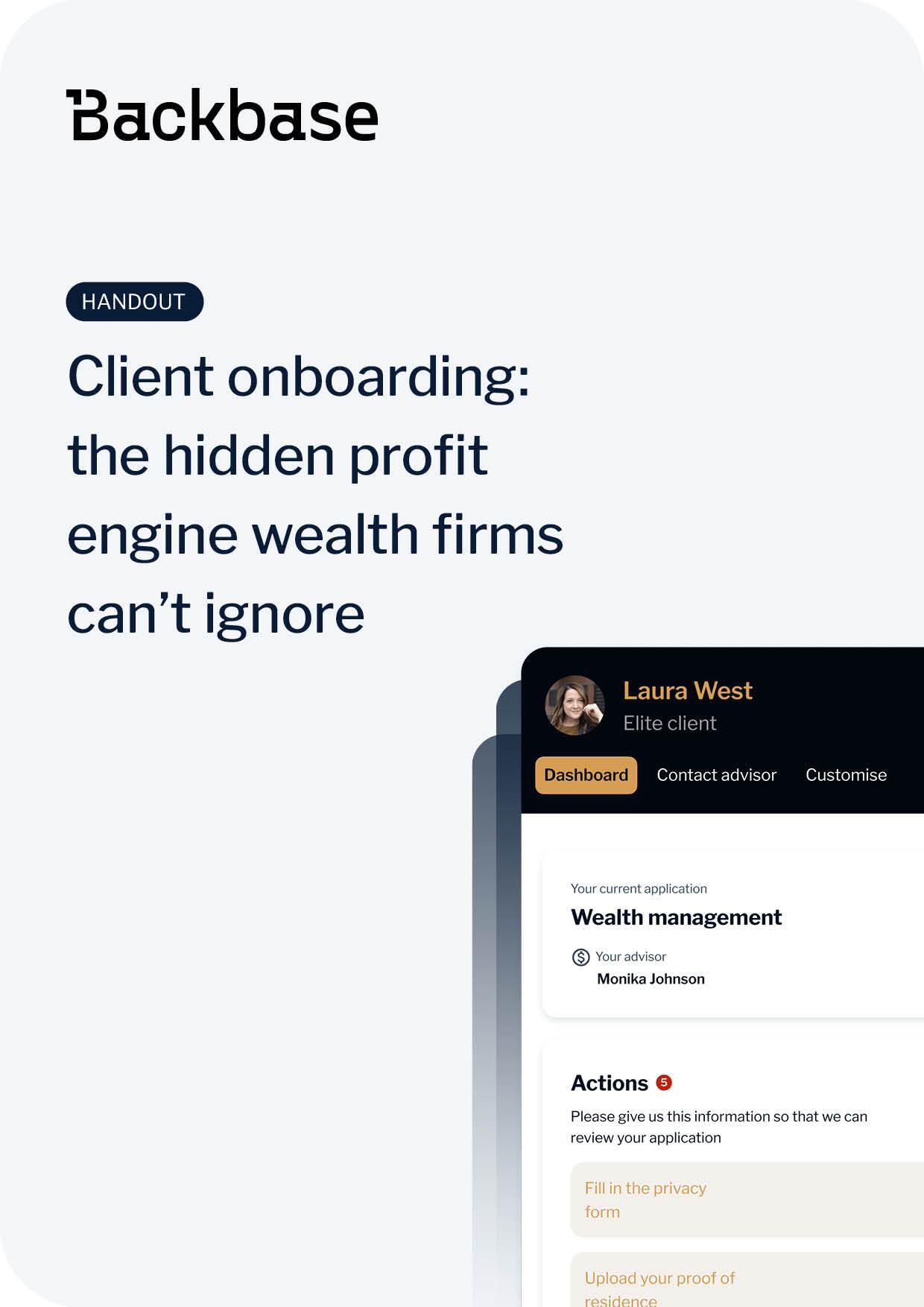
Building client confidence means delivering onboarding that feels effortless while maintaining security and trust. Modern wealth management onboarding succeeds when it's clear, fast, and personal.
If the process feels slow or fragmented, trust erodes immediately. Modern onboarding solves this with intelligent automation that delivers speed without sacrificing diligence.
Key onboarding improvements include:
These digital onboarding journeys integrate regulatory checks invisibly, connecting back-office precision with front-office warmth. Automation handles the repetition; the advisor delivers reassurance. When efficiency and empathy coexist like this, clients read it as competence: the first signal that their wealth is in capable hands.
Empowering the modern advisor
Modern advisor empowerment means giving advisors unified workspaces that turn data into actionable insights. Today's advisors face real-time client expectations and data overload.
From data management to insight creation
Modern advisor workspaces bring everything into one place: client profiles, portfolio analytics, performance data, and contextual signals. Instead of piecing information together across systems, advisors see the full picture of each relationship and what needs attention next. That same unified view is also what makes real client segmentation possible, instead of a blunt AUM-based tier.
An effective workspace delivers:
The next step is moving from insight to action. With agentic AI, task-level agents carry work across the stack—preparing meeting briefs, chasing missing onboarding items, raising service tickets, booking standard instructions, or escalating exceptions. These agents operate autonomously when rules allow, adapt to live events, and log every decision for control and audit.

Making empathy scalable
Digital advisor enablement shifts human energy to high-value activities: judgment, empathy, and timing. The recent J.D Power study proves the impact: advised investors using AI-powered platforms scored 767/1,000 satisfaction, 72 points higher than those without digital assistance.
This improvement comes from freeing advisors from administrative work.
When administration becomes invisible, attention shifts to coaching, planning, and navigating complex decisions. Firms adopting integrated advisor support models report measurable improvements in productivity and response time, along with higher client satisfaction scores.
A new rhythm for advisory work
In this model, insight drives engagement. Advisors enter each conversation better prepared, spend less time gathering information, and leave clients feeling seen. It's an evolution that changes how advice is delivered, measured, and experienced—restoring the relationship at the heart of wealth management.
Advisors embrace this change: 97% say AI-powered tools are important for their role.
Benefits advisors report:

Investing as collaboration
Collaborative investing replaces the old delegate-and-wait model with real-time participation and transparency. Modern investors expect to test ideas and act on opportunities immediately. Shared decision-making has become the new trust standard.
Empowering participation
When investors can see the same data as their advisors, engagement deepens. Interactive dashboards and scenario modeling tools give clients control while maintaining professional guidance.
Key benefits of collaborative investing:
This participatory approach amplifies expertise rather than diluting it. Transparency and partnership have become the new trust standard.
Viewing wealth in full context
Holistic wealth propositions address this by connecting every aspect of a client's financial life. Advisors can align investment strategies with borrowing needs, integrate private and alternative assets, and include sustainability preferences in portfolio planning. Each discussion starts with a single, complete picture of the client—not a list of products.
That context changes the nature of advice. Conversations shift from short-term performance to long-term purpose: how wealth supports family, legacy, and ambition. Clients gain confidence that their advisor understands the whole story, and firms build relationships that deepen naturally over time.
What's next for wealth management in the digital age
Wealth management in the digital age preserves the fundamentals—clarity, confidence, and connection—while transforming delivery methods.
Digital transformation priorities:
This approach keeps organizations moving forward without disrupting client relationships.
Intelligence creates seamless wealth management experiences through:
When technology handles the noise and advisors stay focused on people, wealth management in the digital age becomes easier to navigate and more meaningful to experience. The balance between simplicity on the surface supported by intelligence underneath is what will shape the industry's next chapter.
Frequently Asked Questions
Q: How long does modern wealth management onboarding take?
A: With intelligent automation, clients move from onboarding to investment readiness in days, not weeks.
Q: Do AI tools replace human advisors?
A: No, AI handles routine tasks so advisors can focus on relationship building and complex decision-making.
Q: What is holistic wealth management?
A: It's connecting all aspects of a client's financial life—portfolios, lending, insurance, and planning—in one unified view.